Guest post by Daniel Gosling and Charlotte Smith, 14 October 2023.
In June 2023, The National Archives (UK), generously supported by The Journal of Legal History/Taylor & Francis and British Online Archives, hosted the inaugural Legal Records Jamboree, showcasing legal records from across their collections. A variety of people and groups attended the day, and speakers gave 5-minute presentations on their chosen document before showing off the record in more detail in the Map and Large Document Reading Room at Kew.
In this four-part blog series, Dr Daniel Gosling and Dr Charlotte Smith, Legal Records Specialists at The National Archives, provide an overview of the documents on show during the day and reflect on the different types of legal record held at The National Archives.
This second blog examines the records relating to proofs.
Once the pleadings stage of a case was complete and the court had identified what alleged wrongdoing the parties were to be judged upon, the next stage, the proofs, could commence. The purpose of this stage of the case was to ascertain the truth of the matter so that the court could proceed to judgment. To do this, witness statements were taken and deeds and evidences were produced by the parties to prove that what they claimed was true. The sorts of documents that fall under this broad definition of proofs is therefore far more varied than those of the pleadings. They include interrogatories, the questions put to parties and witnesses, and the answers to these questions, which can be described as depositions, examinations, or affidavits depending on the context in which these answers were taken. But this stage can also include deeds, which proved that a transaction or grant had taken place, or other evidences, any document (or item) that helped a party’s case. Other documents on display during the jamboree related to the recording of these proofs, drawn up by commissioners and other officers of the court.
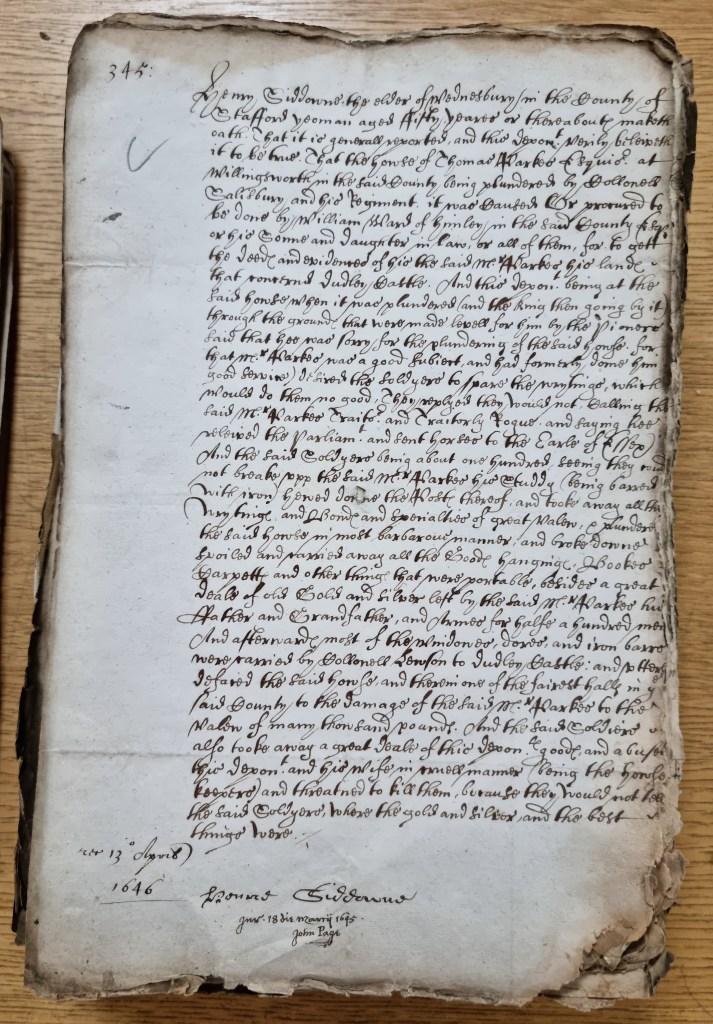
Depositions and affidavits can give us detailed information about individuals and events not otherwise found in other records relating to a case. This 1646 affidavit from a Chancery case, held in C 31/18 and on display for the jamboree, is one such example, providing details about the effect of the conflict between Charles I and his Parliament at a local level. In Parkes v Ward, March 1646, the housekeeper of Thomas Parkes of Willingsworth Hall had to explain why he could not produce his master’s deeds to Dudley Castle in Chancery. His affidavit shows how different expectations of law in war and peace were intermingled and confused, even at the highest level. On [15 May] 1645, soldiers from the Royalist garrison at Dudley had arrived at Willingsworth to retrieve these deeds (required by William Ward, a Royalist officer). As they did so, Charles I rode past and told the soldiers that Parkes had been his good servant and that the deeds would do them no good. The soldiers replied that Parkes was a “traitor and traitorly rogue…and the soldiers being about 100 seeing they could not break up the said Mr Parkes his study (being barred with iron) hewed down the posts thereof and took away all the writings and bonds and specialities of great value, and plundered the said house in most barbarous manner”. Would an investigation of the law of plunder illuminate the king’s view that title deeds were not plunderable?
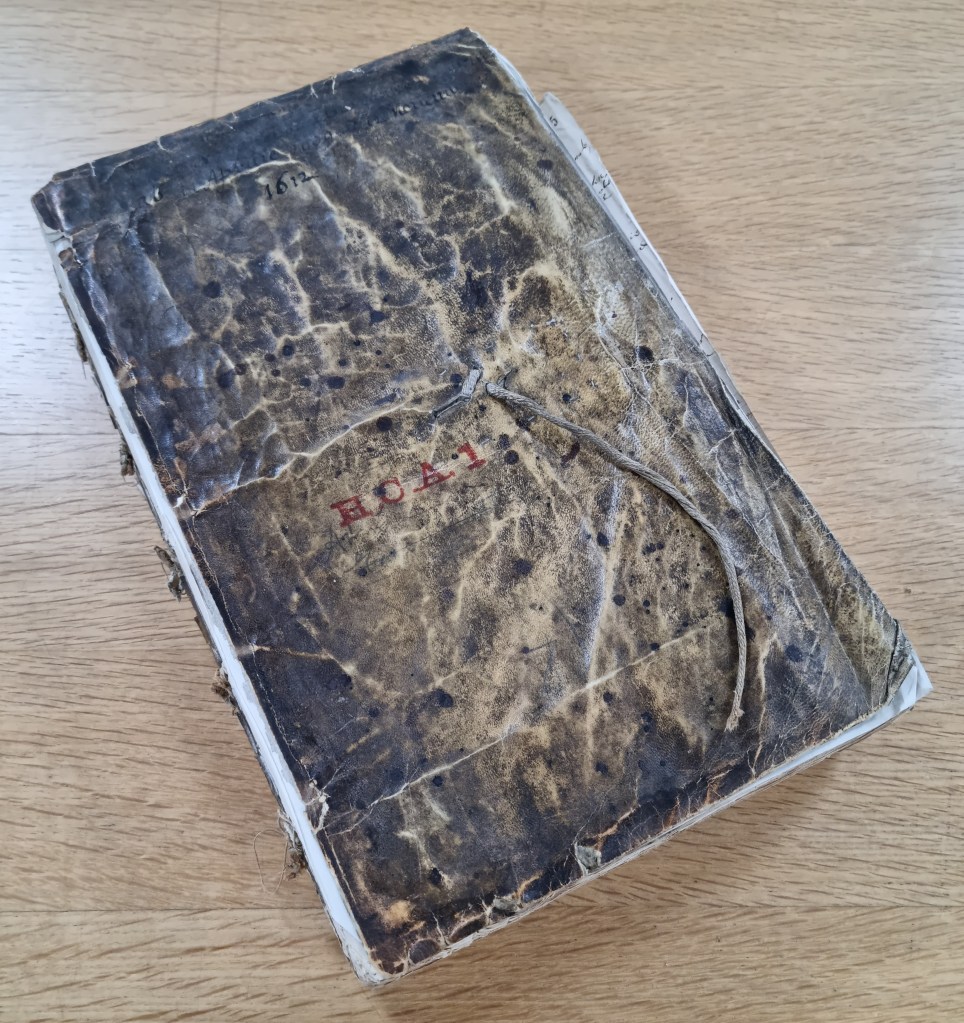
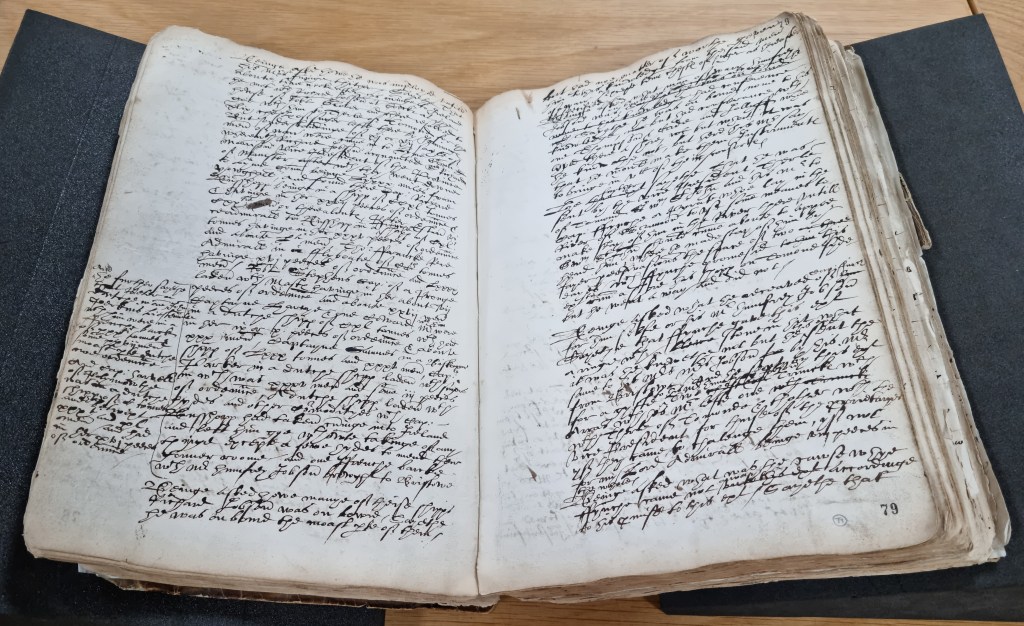
The depositions of the High Court of Admiralty also provide us with fascinating insights into society at that time. The Admiralty court heard cases relating to captured ships, piracy, and crimes committed by personnel within the shipping industry and at sea. HCA 1/47 contains examinations of pirates and other criminals between 1609 and 1612. The deposition on show, by Richard Kerry to Humphrey Jobson, the vice-admiral of Munster, detailed the operations of the “confederacy” of English pirates based in southwest Ireland at the time, discussing the size and organisational structure of their fleet as well as their cooperative ties with local officials, New English settlers, and the Irish population.
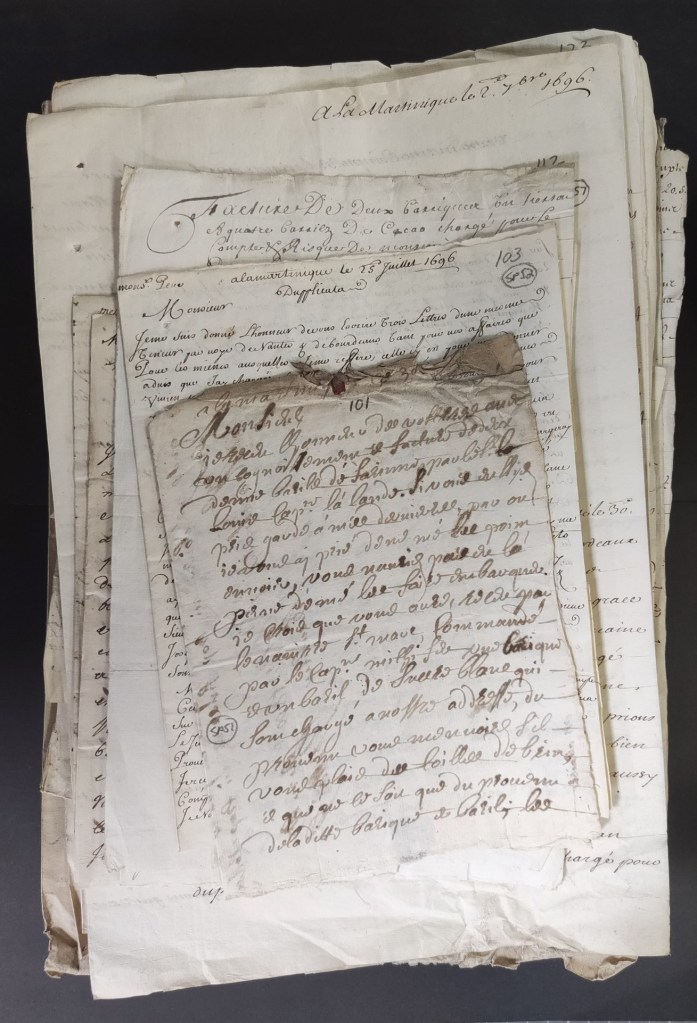
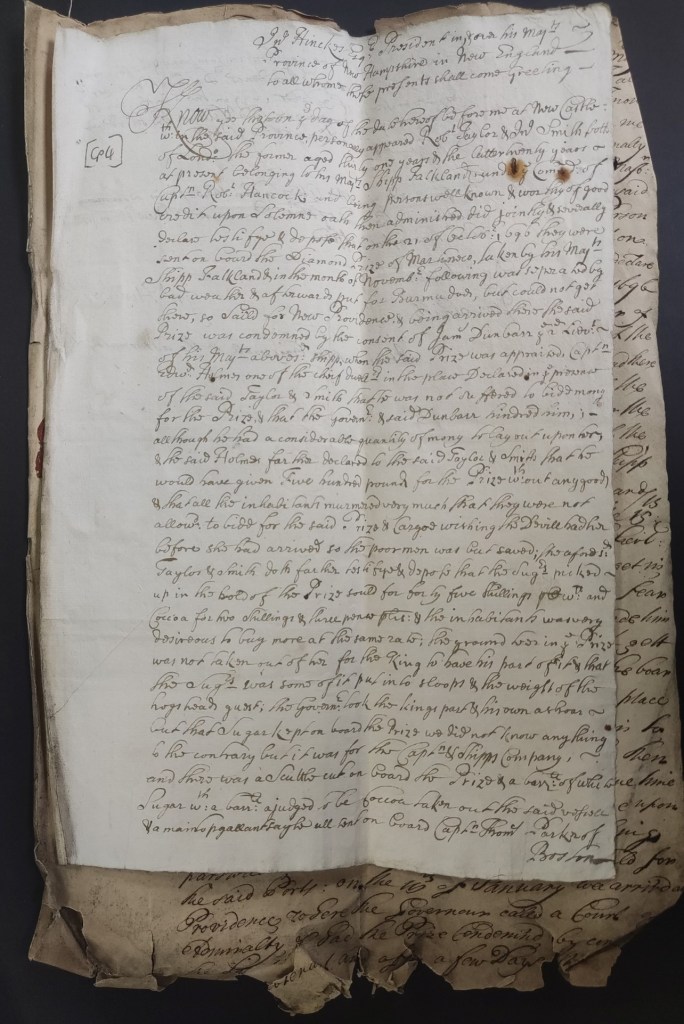
Another arm of the High Court of Admiralty dealt with the Prize Court. This court was concerned with the distribution of ships and property captured in the course of naval warfare. At The National Archives, there is a huge collection of papers relating to or seized as part of this prize process (HCA 32). These are the subject of the Prize Papers Project, led by the University of Oldenburg in partnership with The National Archives, which aims to sort and digitise these records. On display at the jamboree was HCA 32/1867/18, a file concerning the captured ship Diamond of Martinique. This file not only contains depositions and affidavits relating to the court process, but also orders, minutes of proceedings, and letters and bills seized as part of the ship’s capture.
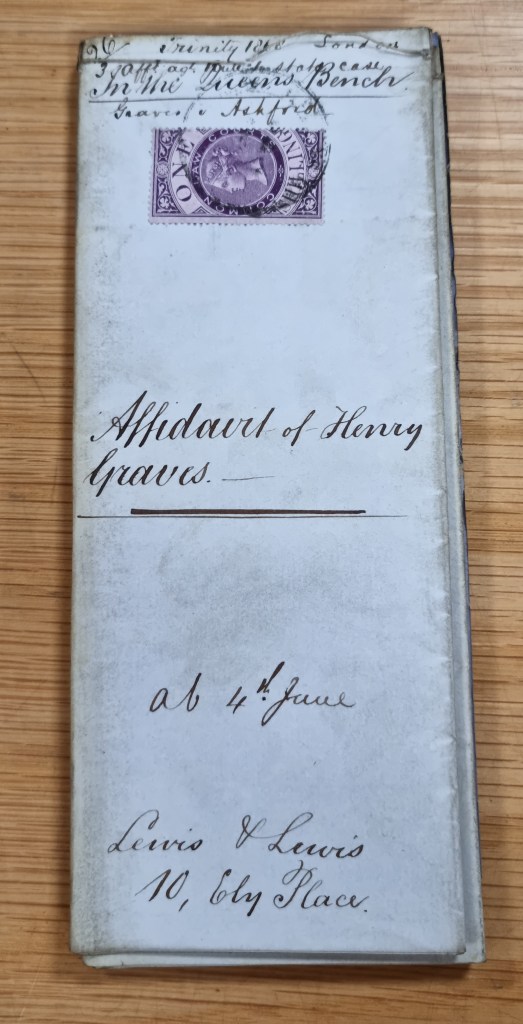
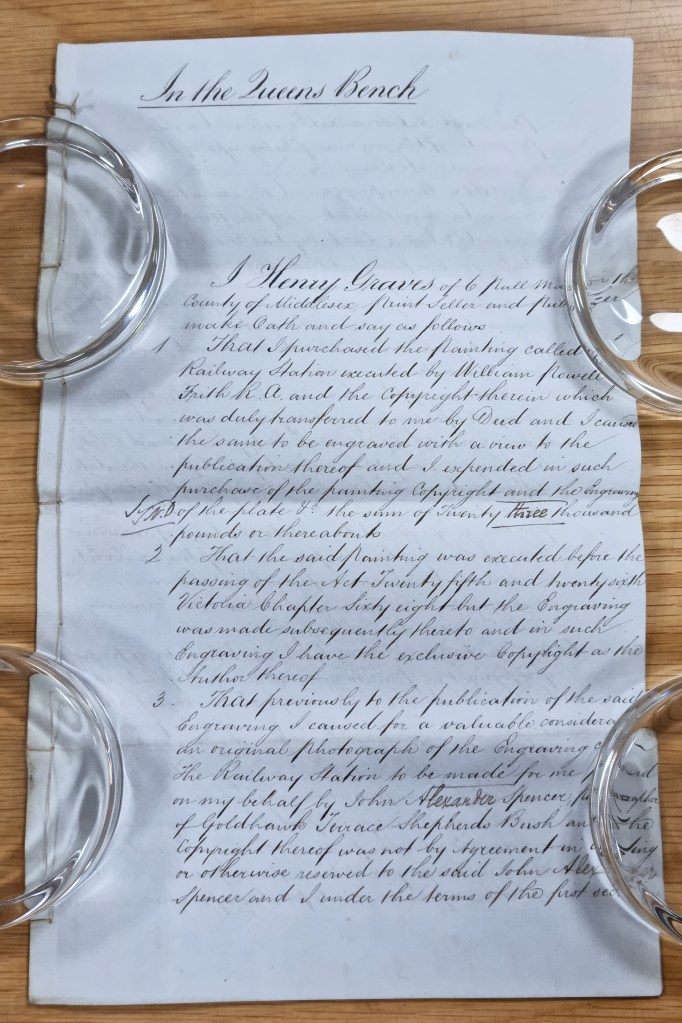
Affidavits for the court of King’s Bench (KB 1), statements taken under oath before the officers of that court, only survive from the second half of the seventeenth century, and aren’t substantially complete until the 1730s. Records for the modern period, particularly post-Judicature Act, are similarly sparse, but where these records survive, they provide the researcher with a rich seam of information on a wide range of topics. At the jamboree, an 1868 affidavit, KB 1/276/1, related to an intellectual property case was displayed. The plaintiff was a print seller who had bought the copyright in engravings of The Light of the World by Holman Hunt. The action for copyright infringement through the production of unauthorised photographic images was brought under the Fine Arts Copyright Act 1862, s8. This enabled copyright owners to recover penalties for infringement of copyright under the Engraving Acts through summary proceedings before magistrates. However, shortly after this legislation was passed, the courts held that print sellers could not bring summary proceedings against defendants for selling unauthorised copies of engraved prints. To get around this limitation, print sellers registered their own independently taken photographs of the authorised engravings and brought proceedings before magistrates, claiming that the unauthorised photographs infringed their copyright in these. Given that magistrates’ decisions were unreported, affidavits like this one, which was given in respect of a rare appeal to the High Court, offer a fascinating insight into the legal process and the ways in which print sellers were manipulating the law.
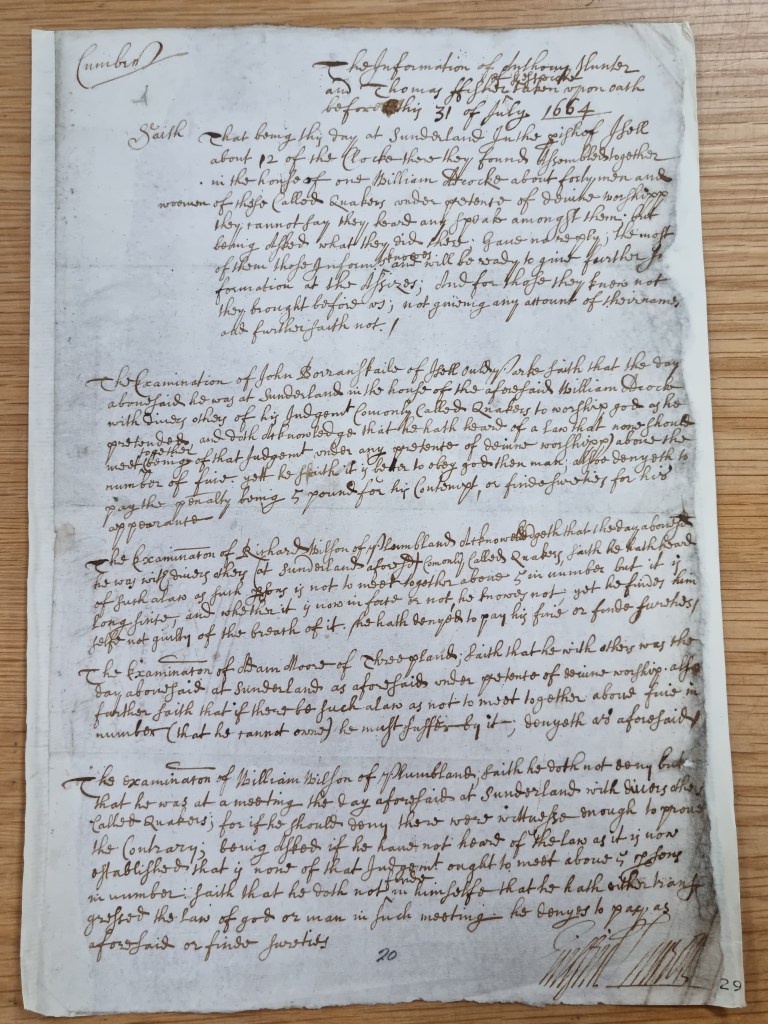
Depositions weren’t only taken at the central courts: a huge collection of records survives at The National Archives for depositions, examinations, and similar that were created outside of Westminster and London. For the equity side of the Exchequer, county depositions in E 134 often provide the original commissions to take witness statements, and are a valuable source of local place names, particularly for the names of pubs, as they were social hubs in the community where the commissioners could conduct their court business. The assize courts, too, collected depositions, the difference there being that the whole court process was conducted outside of Westminster. For the Northern (then North-Eastern Circuit), depositions and case papers are collected in ASSI 45. Two records from this series were on display for the jamboree. The first, and earliest, ASSI 45/7/1/29, concerned the discovery of forty Quakers at a house in Sunderland, and the subsequent examination of several of these Quakers.
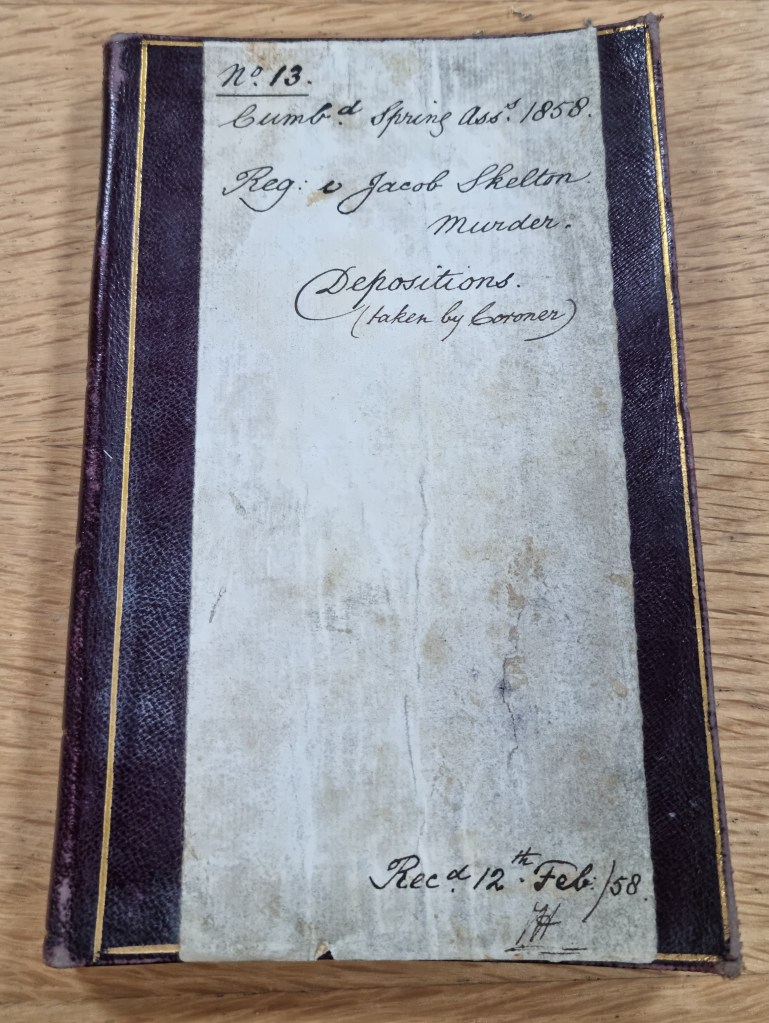
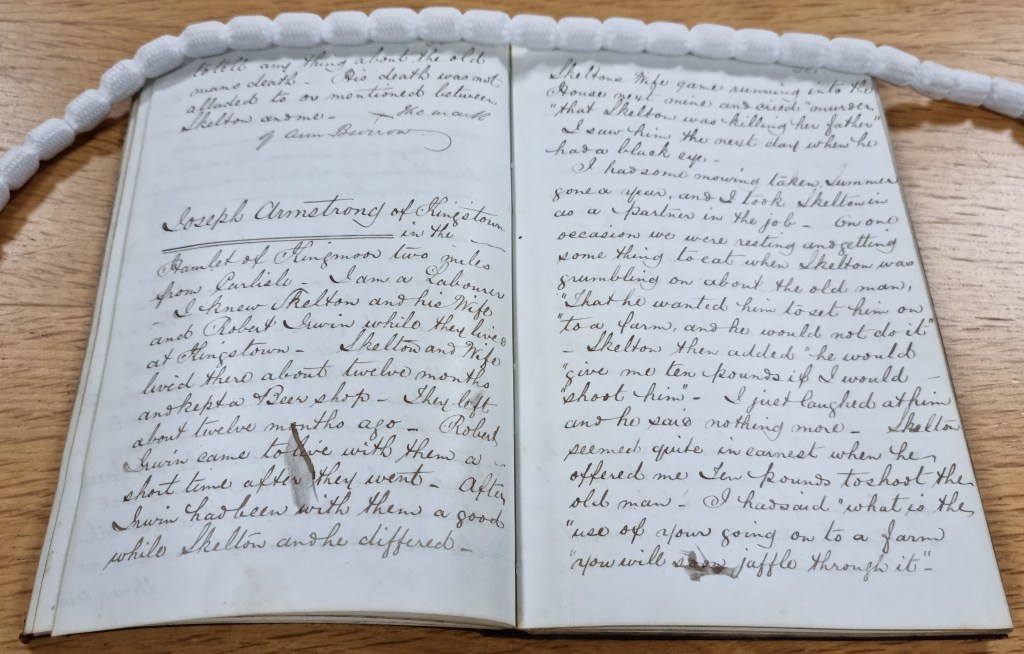
The second record from this series, in ASSI 45/72, is not a deposition but instead a coroner’s notebook, received by the court in 1858, containing notes of an inquest held in respect of a murder victim in Cumberland. This notebook sparks myriad lines of inquiry into those who became participants in the legal system following a death. It tells us something of the coroner, William Carrick, who served for 42 years and held over 4,000 inquests. It allows us, too, to examine other characters in the drama: the surgeon who sketched the injuries; the Cumberland police; the jurors and the judge; and, of course, the story of the accused man who was ultimately acquitted of murder.
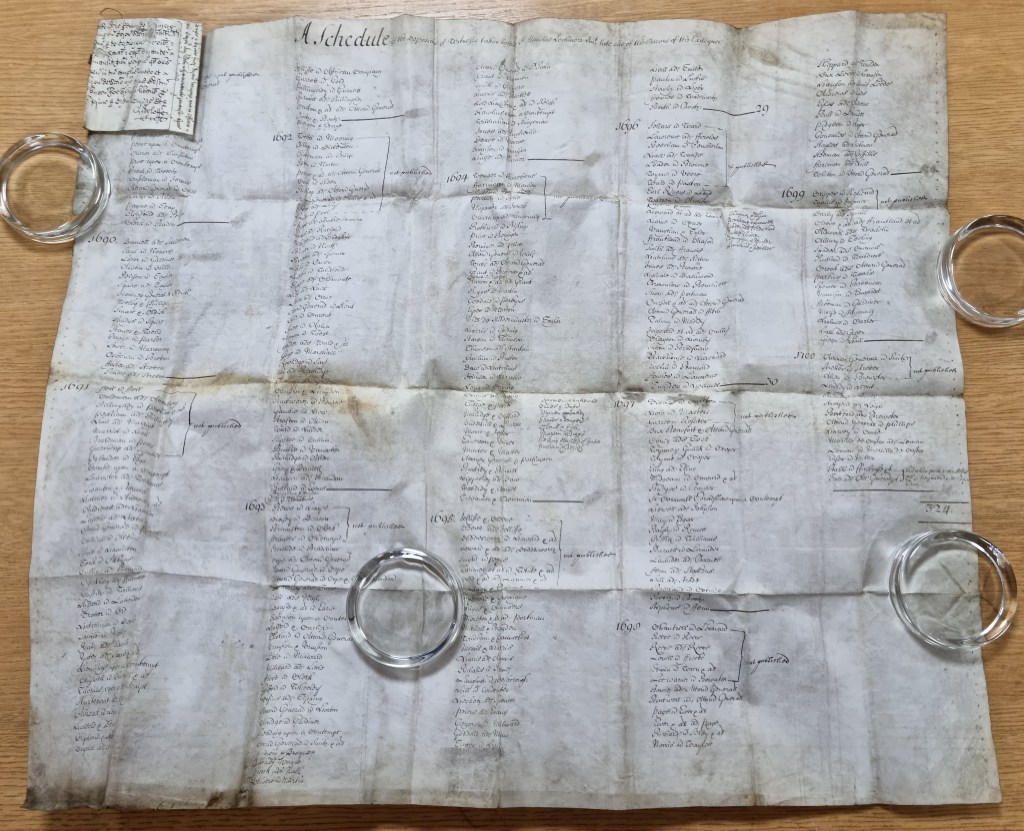
Records detailing the deposition process, rather than the depositions themselves, are rarer survivals but offer us a different perspective on the legal systems and the records they create. On display for the jamboree was E 133/162/12, part of a box of schedules of depositions heard by the barons of the Exchequer. This document, from 1702, is a schedule of the depositions taken before Sir Nicholas Lechmere, puisne baron of the Exchequer, between 1689 to 1700. Documents such as these are fascinating because we can connect them to the depositions themselves (in this case also held in E 133) to get a better idea of how these records were created and how the legal process worked in practice.
The final document on display for the jamboree relating to proofs was a box of deeds and evidences relating to the Chancery case Fox v Turner and Lanesborough, a dispute concerning the personal estate of George Lane, late Viscount Lanesborough, in Ireland. As such, this box of exhibits, in C 106/153, contains deeds relating to lands and estates in Ireland, as well as two great seals of Ireland from the reign of Charles II, attached to letters patent. Not all Chancery cases produced so many exhibits, or even reached this stage of the case, but when they did these records can provide a great deal more context to the dispute.

The nature of the proofs stage, to ascertain the facts of the matter, mean that the documents created as part of this part of the legal process provide us with details and opinions that can’t be found elsewhere. Not only do they progress the story of the specific legal dispute, the names of witnesses describe local networks, and exhibits give us insight into the sorts of records individuals kept relating to lands and estates. Furnished with these proofs, the court was now able to proceed to judgment, the topic of the next blog.
Documents selected by Amanda Bevan, Graham Moore, Oliver Finnegan, Elena Cooper, Sally Gold, Helen Rutherford, Dan Gosling, and Neil Johnston.
If you have a question about the Legal Records Collections held at The National Archives, Dan and Charlotte welcome enquiries from interested researchers.
All documents © The National Archives. Photos taken by Dan Gosling.
Discover more from Legal History Miscellany
Subscribe to get the latest posts sent to your email.
 Legal History Miscellany