Guest post by Daniel Gosling and Charlotte Smith, 18 October 2023.
In June 2023, The National Archives (UK), generously supported by The Journal of Legal History/Taylor & Francis and British Online Archives, hosted the inaugural Legal Records Jamboree, showcasing legal records from across their collections. A variety of people and groups attended the day, and speakers gave 5-minute presentations on their chosen document before showing off the record in more detail in the Map and Large Document Reading Room at Kew.
In this four-part blog series, Dr Daniel Gosling and Dr Charlotte Smith, Legal Records Specialists at The National Archives, provide an overview of the documents on show during the day and reflect on the different types of legal record held at The National Archives.
This fourth and final blog examines the records relating to law reports, legislation, and other records created as part of or in response to the legal process.
Taken together, the pleadings, proofs, and verdicts can tell us the whole formal story of a case, from initial complaint to judgment. However, there are many other types of record that we could (and do) consider legal records, documents created as part of the legal process or in response to it, or in the case of legislation, records that shaped the sort of cases that courts of law could hear.
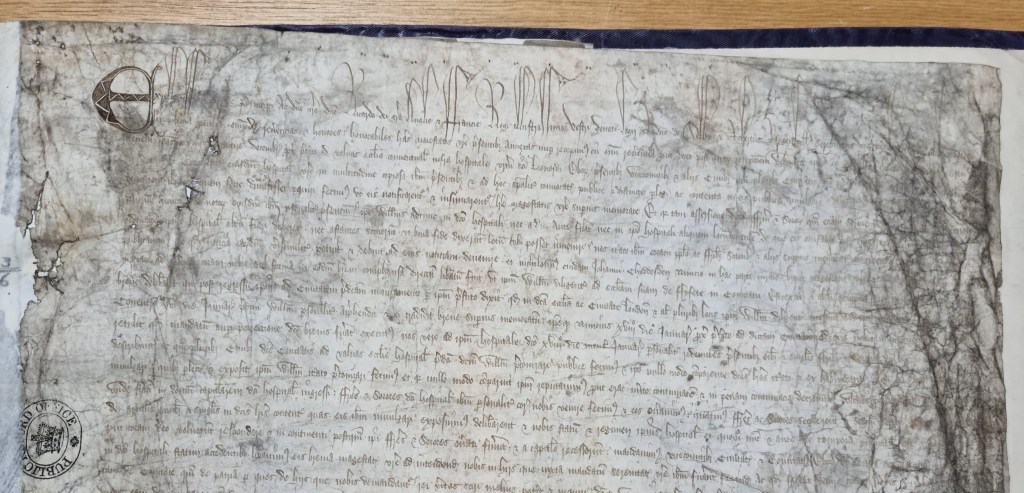
Though The National Archives holds the records of the central law courts and their related jurisdictions, there were other legal systems and courts in play, whose records are held elsewhere. Ecclesiastical courts were granted legal authority from God, first via the Pope, then after the break with Rome via the Supreme Head of the Church of England, the monarch. As such these court records, when they survive, are preserved in their respective diocesan and archdiocesan repositories. However, some records relating to these jurisdictions have ended up at The National Archives. The earliest record on display at the jamboree, C 270/21, described an enquiry investigating alleged abuses committed by William Botheby, master of St Leonard’s hospital, York. A visitation of the hospital was conducted in 1399, and the document includes the original royal commission to conduct this investigation, as well as the copies of the inquests. The reason this document ended up at The National Archives in C 270 (Ecclesiastical Miscellanea created as part of the Chancery’s ecclesiastical business), was because of the ancient right of the Chancellor, the head of the Chancery office, to visit royal hospitals and chapels.
Other records on display at the jamboree concerned the administration of legal processes. This note from 1598, in SP 12/268 folio 67, concerns sums paid to the late William Cecil Lord Burghley, as Master of the Court of Wards and Liveries, with mention too of the attorney and receiver of the court. This list wasn’t intended as a public record for preservation, and we owe its survival to the recipient of the note disregarding (or being unable to perform) its final instruction. The foot of the note reads “this note to be burned”.

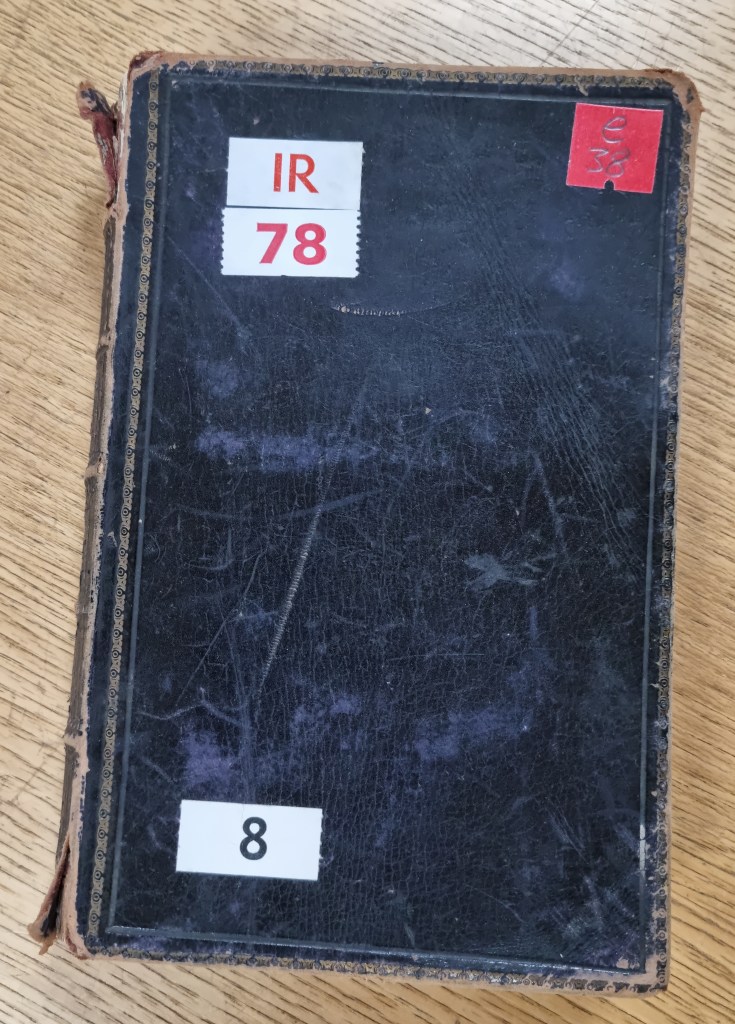
Other instructions were designed to be preserved and were more informative. On display at the jamboree was an 1855 instruction book (IR 78/8) issued by the Inland Revenue to their surveyors. The instructions contained in this book guided the surveyors in their day-to-day work. Not only did they lay down how surveyors were expected to behave and the nature of their official duties, they also explained the meaning of the charging provisions, exemptions, and abatements in the tax Acts, and how they should be applied in various situations. Surveyors were bound by these and had to obey them to the letter. But these volumes were also deliberately constructed in such a way that the surveyors could make further notes to help them in their work. They were expected to become totally familiar with the contents, and they had to compile their own index (there are blank pages at the end of the volume for this purpose). Their superior officers would check that they had done this work. These manuals are well-worn, carried around in a case or pocket and battered through constant use.

Legislation is another key type of legal record. At the jamboree, both physical and digital examples of legislation were on show. Though original acts from the Tudor period onwards are in the care of the Parliamentary Archives, a Chancery copy of these acts was entered onto the Parliament Rolls (C 65), a series that starts in the fourteenth century and continues into the twenty-first (and indeed is still accruing). This and other series, particularly in Chancery, mean that there is much to find at The National Archives for a researcher interested in UK legislation (and before that, in the legislation of England and Wales).
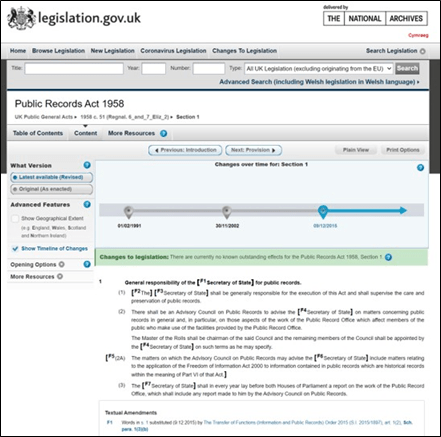
Today, UK legislation is published on legislation.gov.uk, delivered by The National Archives, as soon as it is published, in multiple formats including PDF, HTML and XML. In addition, it publishes updated legislation, creating revised versions which track changes over time. For the jamboree, the team behind this site introduced a number of features of legislation.gov.uk. Though its coverage is mostly complete for legislation at least partially in force in the period after its main base date of 1991, the site also carries an extensive number of older statutes, with the oldest being the 1267 Statute of Marlborough. The team are constantly working to improve content and coverage. The site recently published all Local Acts back to 1801 and work is underway to publish all Acts of Parliament back to 1792 (including Acts that are now repealed) and UK Statutory Instruments from 1948 to the present day. The team are also working on a new service that aims to support more advanced use of the dataset, including a bulk download function, the Query Builder service, and the Words Explorer function.
The National Archives doesn’t only hold records relating to domestic legislation, however. The laws of former British colonies and dominions could also often end up at The National Archives in the form of copies sent to the central Colonial Office, Commonwealth and Foreign and Commonwealth Offices, and their related bodies. At the jamboree, a 1795 Grenadian Act enacted in response to Fédon’s rebellion was on display (CO 103/9, folio 215). This act attainted all persons named of High Treason unless they submitted to the justices before 1 September 1795. As a result of this act, 400 people were condemned, 200 rebels were enslaved, and 50 were executed.

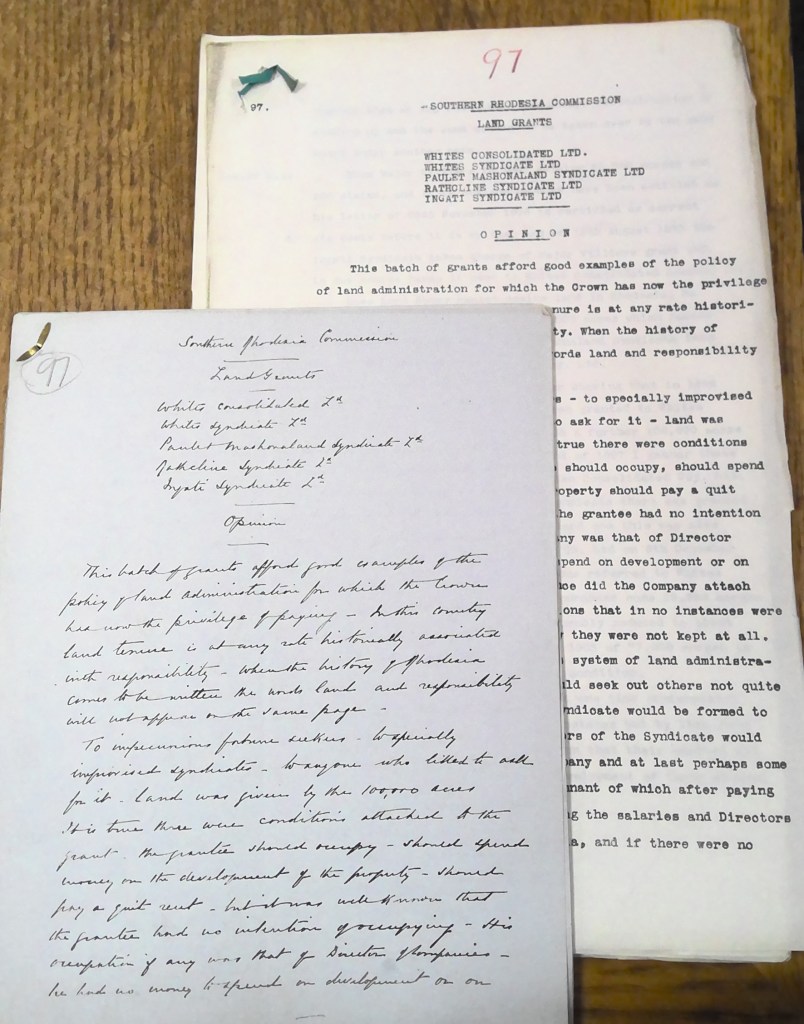
Another document on display at the jamboree, TS 27/163, concerned Britain’s imperial administration in relation to law. The file concerns reports compiled on claims made to the Southern Rhodesia Lands Commission after the decision of the Judicial Committee of the Privy Council in the Special Reference as to the Ownership of the Unalienated Land in Southern Rhodesia. Although they appear unpromisingly formal and bureaucratic, these reports shed light on the ways in which they question the integrity and value of British imperial dealings in Africa, and step outside of official narratives of British superiority, efficiency, and benevolence. They afford us rare insights into the unguarded opinions of officials, expressed in papers which were not intended for publication. In this case, we also have an example of records being found in a Treasury Solicitor series which fill gaps left by records which are closed or missing at transfer in other record series.
Once the legislation has been created, and the court cases have concluded, another type of legal record, law reports and opinions on the law, comes to the fore. Concerning legislation, at the jamboree Marton Ribary challenged the scholarly “obsession” with the original text (Urtext), fuelled by the way we perceive text in the Gutenberg era. Ribary introduced the topic by saying a few words about the Index 2.0 project, which aims to create a database of about 75,000 text critical comments on the juristic fragments preserved in Emperor Justinian’s historical sourcebook of Roman law, the Digest (533), which are brought together in the Index Interpolationum (1929-1935). The so-called hunt for interpolations justified its mission by pointing to an imperial constitution in which Emperor Justinian urged his editors to adapt the selected juristic fragments for doctrinal consistency and eloquence. A few centuries later, Moses Maimonides similarly urged the readers of his autograph manuscript to correct mistakes in his code of Jewish law, the Mishneh Torah. The perception of the written text as an admittedly imperfect surrogate of the original idea was replaced by Gutenberg’s printing press, which called the reproducible and unchangeable “original text” to life. The Gutenbergian perception was then projected onto texts created and transmitted in the pre-print era, occasionally resulting in overblown text-critical obsessions with the “original”. Ribary suggested that the current digital infrastructure is still used to protect the Gutenbergian perception, but there is a chance that we are at the dawn of a new era in which printed documents, computer codes, audio recordings and other media could become perceived again as mere surrogates of an original idea underneath.
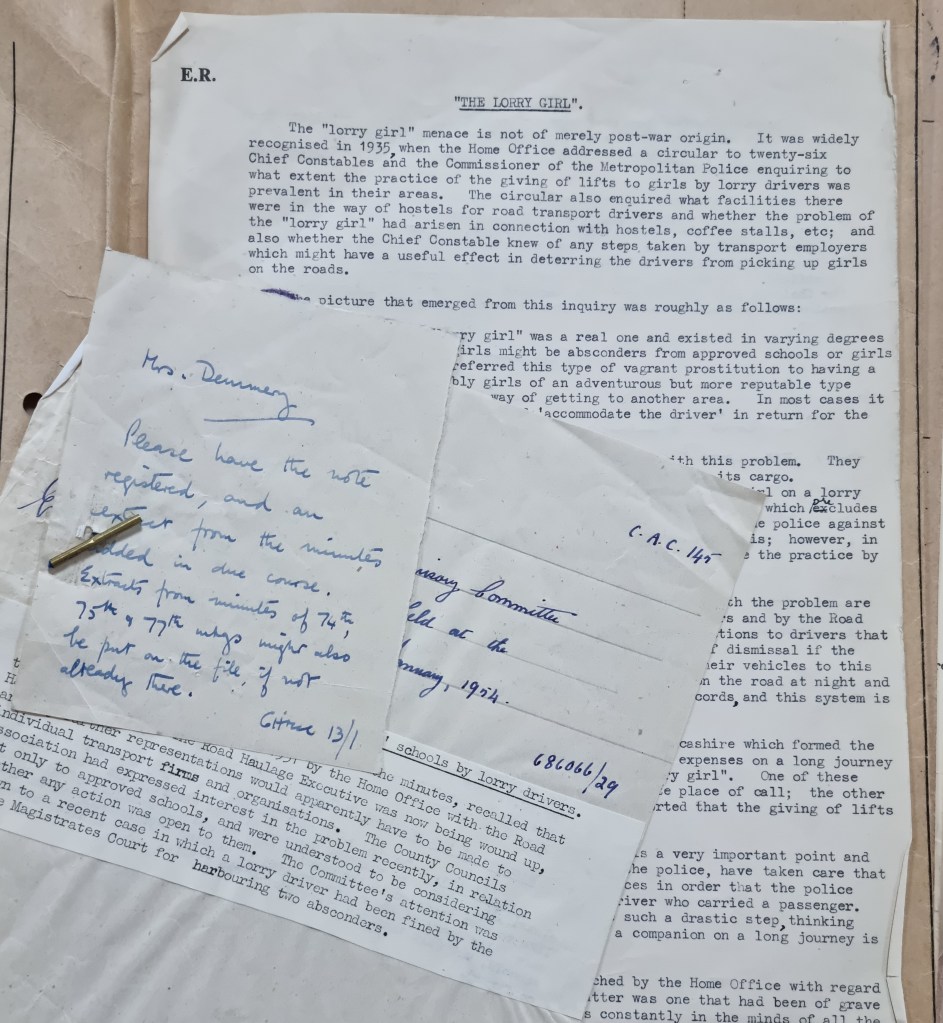
Records of other, non-legal, government departments also comment on legal records and legislation. Two records from HO 45, the registered records of the Home Office, highlight how legal concerns could spill over into the records of other departments. The first, HO 45/24683, concerned the deportation of a gang of Chinese men caught smuggling opium in Liverpool. The second, HO 45/24986, consists of a variety of papers on the so-called menace of the “Lorry Girl”. These were girls, many of whom had absconded from approved schools, who engaged in “lorry-jumping” or hitch hiking as a means of moving around the country. These papers reflect the diversity of domestic matters dealt with by the Home Office, including immigration, gambling, children, drugs, policing, and criminal justice.

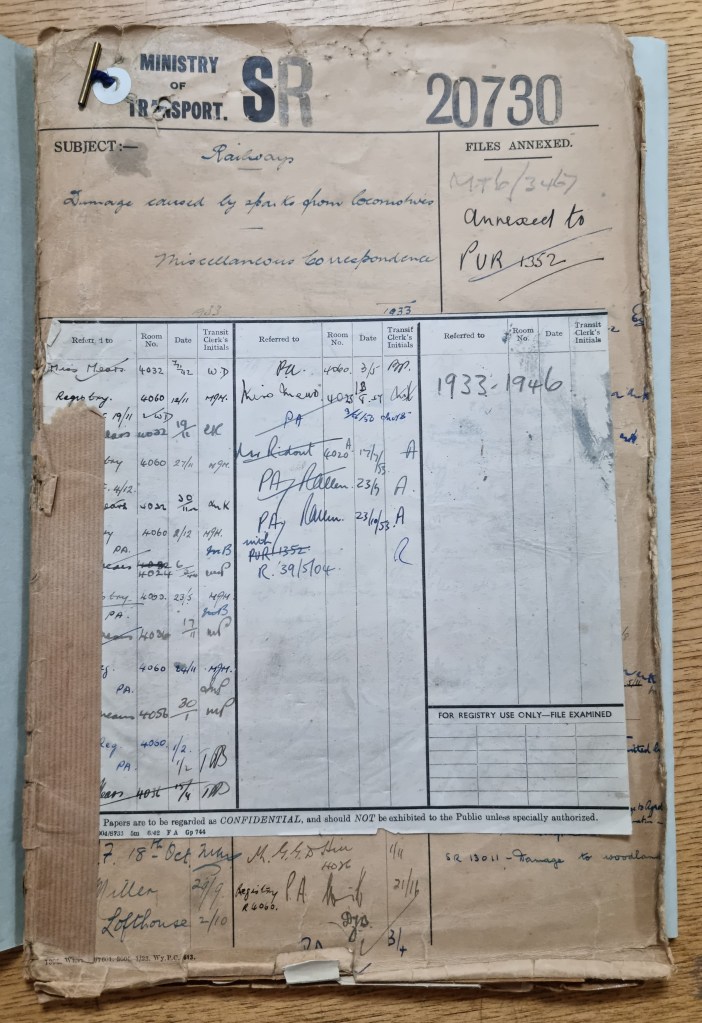
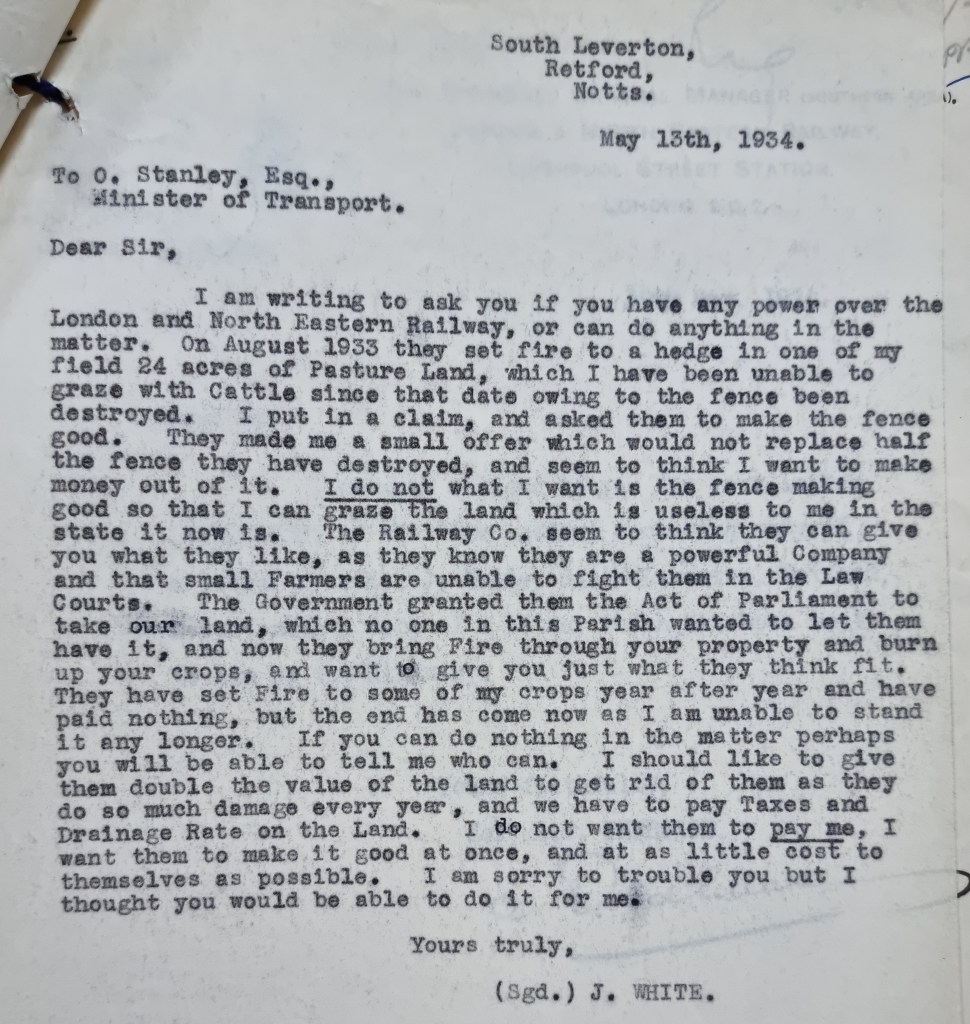
Correspondence to and between government departments can also help us shed light on legal concerns and processes. MT 6/3467 is a file concerning the “railway sparks” cases, damage caused by sparks from locomotives. Dating from the inter-war years and the era of the “Big Four” railway companies, this file contains letters begging for the assistance of the Ministry of Transport in obtaining redress from the railway companies for the losses caused by lineside fires. Such requests were made in the context of an almost off-hand dismissal of such claims by the railways, who had the law very much on their side. The ability of the railway companies to rely on the defence of statutory authority made it incredibly difficult for claimants to recover their losses, and the Railway Fires Act 1905 had done very little to improve their lot. The letters in this file speak to the great frustration and hardship experienced by such individuals, bringing us into intimate contact with the lived experience of the law and the lives of the ordinary people affected by it.
The registered files of the Offices of the Minister of Reconstruction and the Lord President of the Council and Minister for Science also concern legal matters relating to British transport. CAB 124/389 is a file concerning the proposal of a senior government minister to use the provisions of the Town and Country Planning Act 1947 to authorise the replacement of the Charing Cross railway bridge by executive action, and without the need to consult Parliament. The proposal failed, and civil servants effectively curbed the attempt to extend executive power, after officials asserted that the legislation could not be used for this purpose.

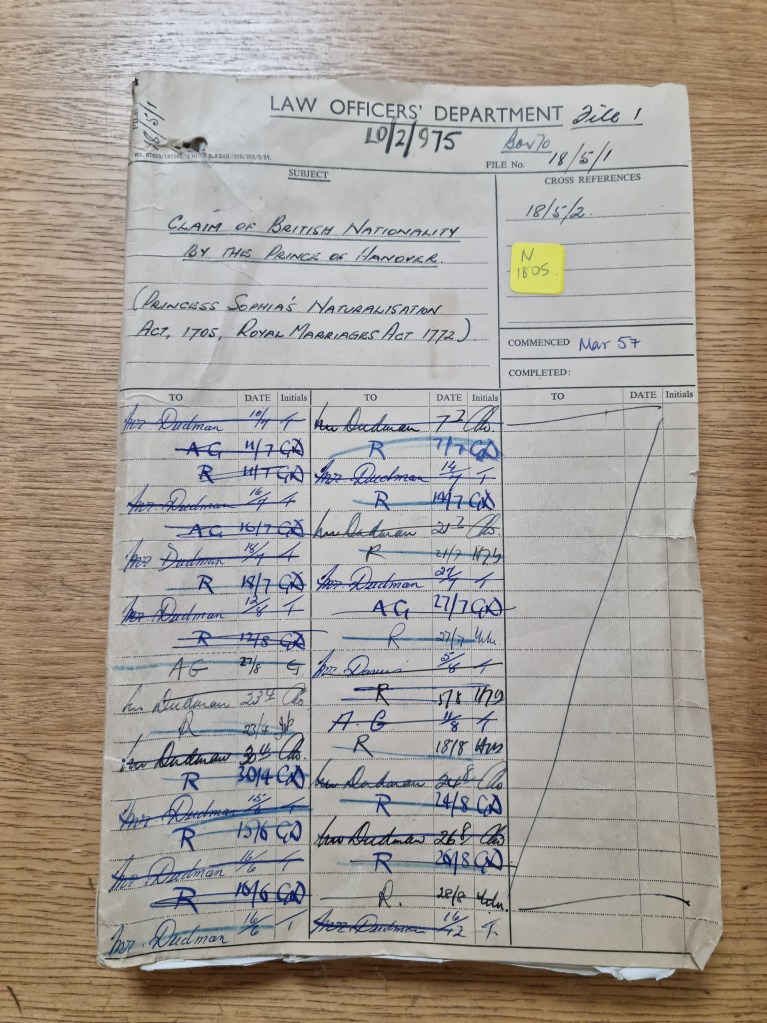
Files of legal opinions can also be found at The National Archives. LO 2/975, which sits within the registered files of the Law Officers Department, contains the 1957 opinion regarding the claim to British nationality of Prince Ernest Augustus of Hanover under Princess Sophia’s Naturalisation Act 1705 and in respect of the Royal Marriages Act 1772. The 1705 Act, which was repealed by the British Nationality Act 1948, granted British citizenship to any Protestant descendant of Princess Sophia, electress of Hanover, and brought them within the line of succession to the British throne. The Royal Marriages Act 1772 provided that descendants of George II could not be married without the consent of the Sovereign.


Finally, and fittingly considering that the legal records jamboree was a celebration of legal records held at The National Archives, one of the records from Lord Denning’s report on legal records (LCO 2/7977) was on display. The Denning Committee, which finally issued its report in 1966, was tasked with examining the court records existing and accruing in various courts and at the Public Record Office; recommending which classes of records should be permanently preserved and for what purposes; advising on retention periods for records not selected for permanent preservation; and considering whether any of the records considered should be microfilmed. Following the extension of its terms of reference in 1964, the Committee’s considerations embraced almost all criminal and civil court records for England and Wales, the last major review of the archival treatment of these legal records. Its work has had an enduring impact on archival policy, and thus on the work of researchers. Its correspondence files offer a fascinating insight into the personalities and politics which shaped the formation of that policy, revealing the human face of archive formation.

The Legal Records Jamboree successfully showcased a wide range of records held at The National Archives from across the centuries. If there’s one thing that the selection of records on display demonstrated, it’s that the term “legal record” has a very broad definition, at least to the minds of The National Archives’ Legal Records Specialists. Documents created as part of court process – pleadings, proofs, and judgments – provide one definition, but equally they can be joined by records relating to legislation, law reports, opinions on the law, and even correspondence and reports indirectly connected to legal cases and legislation.
The practical limitations on the day, which limited the number of documents that could be displayed, meant that there were types of legal record that weren’t represented. Earlier medieval material, though less abundant than its early modern successors, shows us how the English Common Law and other legal systems developed into the systems that persevere to this day. Deeds and grants, that only become part of the court process if brought in as evidence, can also constitute legal records in their own right, being a written contract or agreement. So too, and for the same reason, were wills legal records. Plenty of scope and potential, then, for future jamborees.
Documents selected by Paul Dryburgh, David Ibbetson, Chantal Stebbings, Clare Allison and Catherine Tabone, Chris Day, Charlotte Smith, Marton Ribary, Sascha Auerbach, Jessamy Carlson, Mark Wilde, Ray Cocks, and Rebecca Probert.
If you have a question about the Legal Records Collections held at The National Archives, Dan and Charlotte welcome enquiries from interested researchers.
All documents © The National Archives. Photos taken by Dan Gosling.
Discover more from Legal History Miscellany
Subscribe to get the latest posts sent to your email.
 Legal History Miscellany