Posted by Krista J. Kesselring, 24 October 2024.
In 1580, Joan Coleman faced accusations that she had killed a person by means of witchcraft. A poor woman who worked as a midwife in villages and towns on both sides of the border between Buckingham and Oxford, Coleman had raised the suspicions of Edmund Turner, then resident in Water Stratford. Turner came to believe that Coleman had killed his wife Frances through sorcery and enchantment. She had done so, he maintained, at the instigation of his landlady and nemesis, Mary Cornwall. But grand juries in both Aylesbury and Buckingham deemed the evidence insufficient to send the accusation to trial each time Turner tried to bring Coleman to justice. Why did the jurors repeatedly refuse to indict Coleman, and what might we learn from their refusal about the history of witchcraft in sixteenth-century England?
We know of this case because a frustrated Turner complained to the Court of Star Chamber in Westminster.[1] Star Chamber did not try witchcraft, but it did hear allegations about abuses of legal procedure. Turner argued that his case against Coleman had been so clear and manifest that the men on the grand juries must simply have perjured themselves: they had ignored their oaths and the evidence, whether from fear or hope of favour from Coleman’s employer, Mary Cornwall. In Star Chamber, it was the jurors on trial, not Coleman. Luckily, we learn rather more from the records of their perjury case about the evidence, arguments, and procedures used in witchcraft trials than we can from the sparse records produced by witchcraft cases themselves.

Turner and his witnesses said that Joan Coleman had damned herself with her own words. Physicians had not been able to diagnose his wife’s illness and several people thought her death sudden and strange, but Turner had not suspected witchcraft until Coleman herself started expressing remorse. Coleman allegedly confessed to one Margaret Cudsden that she was ‘sorry for that she was the death of Mistress Turner’. According to Cudsden, Joan told her that Mary Cornwall had suspected her own husband of infidelity or at least an infatuation with Frances and had offered Coleman a substantial payment—four nobles a year for life—to despatch them both. (The Turners rented part of the property Mary retained from her first marriage and lived cheek-by-jowl with her and her second husband.) Cornwall’s husband survived, but Turner’s wife did not. Joan Coleman fretted to Cudsden that she and Mistress Cornwall surely had places reserved for them in hell for what they had done. (From the depositions, it does seem that Joan believed that she played some role in Frances’s death, though perhaps blaming herself for having failed to save Frances rather than for killing her.) Others had heard Coleman say that her life was in Cudsden’s hands, lending credence to the claim that she had confessed something damaging to the woman now deposing against her. Stories of petty thefts and reports of earlier imputations of witchcraft fleshed out Turner’s case against Coleman.
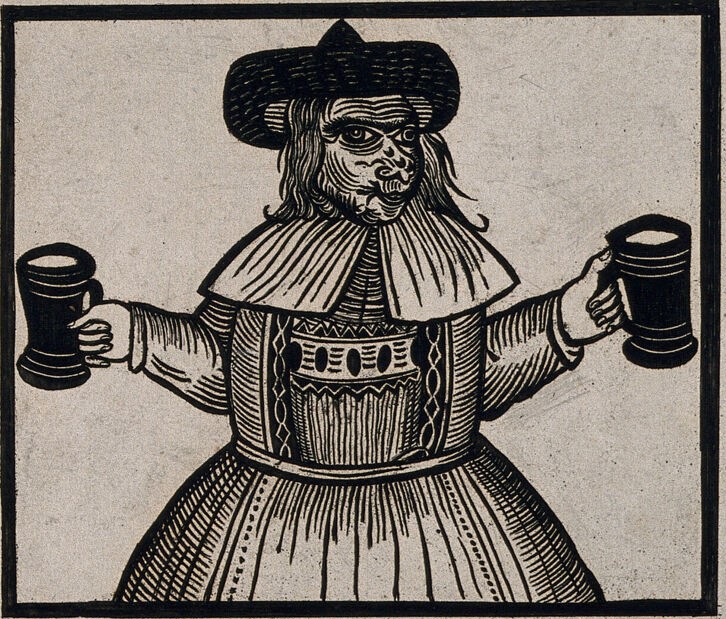
The grand jurors, though, countered by critiquing the credit and credibility of Turner’s witnesses. They said that after they had been convened and sworn in, they had heard from the local Justices of the Peace who had done a preliminary investigation upon Turner’s initial complaint. The jurors had then asked after the credit of the parties to the dispute. They heard much against Turner’s chief witness. Margaret Cudsden had reportedly been ‘busy’ with one of Turner’s servants. She and her husband now lived off Turner’s largesse, or that of his late wife’s brother. Before her marriage Margaret had tried to kill herself, ‘without any just occasion’, an infamous act said to tarnish her credit in lasting ways. Another witness had abandoned a husband and bigamously remarried. One man had been in prison on suspicion of horse theft. Another was a ‘common drunkard’, or at least very often ‘out of the way with drink’. One had been called before the church courts for lewdness. And so on. The grand jurors said that evidence from such people could simply not be trusted.
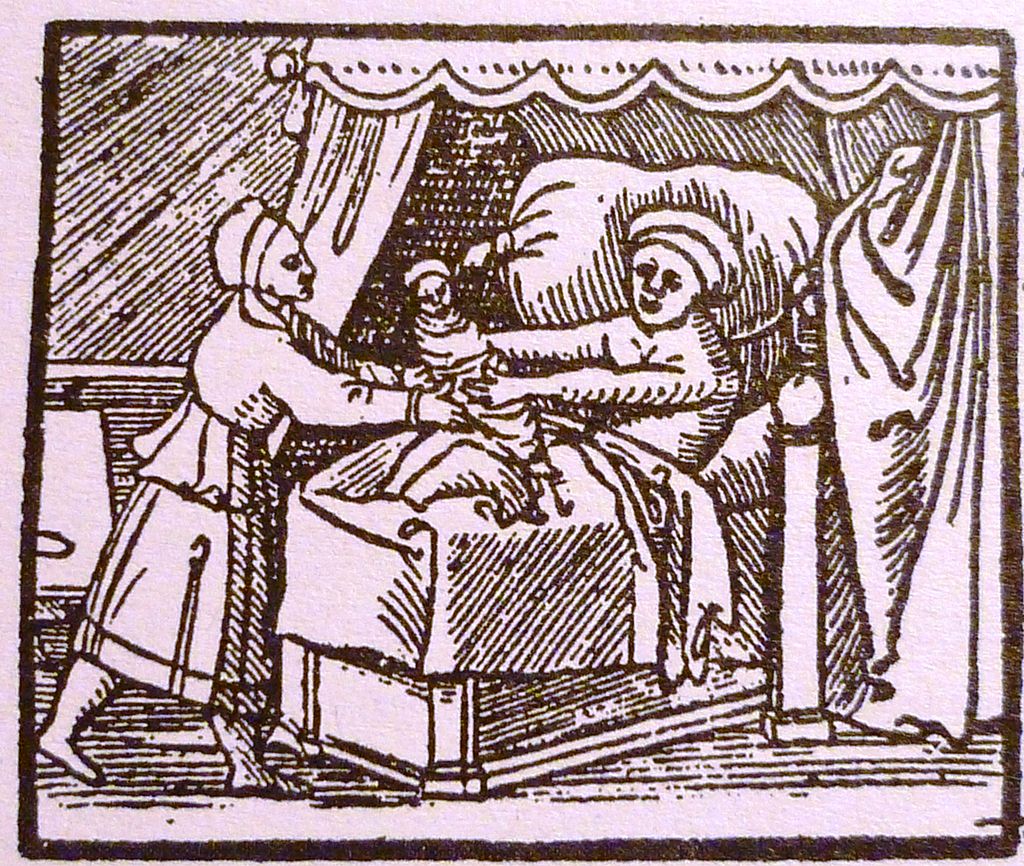
In contrast, the jurors insisted they had heard favourable reports of Coleman’s credit and character. They said they had inquired after her among the ‘best sort’ of her neighbours in Buckingham and from these inquiries came to think her ‘a very honest woman unlike to do such a heinous fact’. The witnesses they now called upon to support their assessment focused on Joan’s long and capable service as a midwife and healer. One woman said she had known Joan for at least ten years and always thought her ‘ready to help her neighbours at every tide and time’. Joan excelled as a midwife; she had helped some women in perilous labour when other midwives of greater fame failed, but never charged their higher fees. Another woman testified that she had known Joan for four years, and always thought her ‘quiet and harmless…ready and diligent, early and late to help any of her neighbours’. She also noted Joan’s skills as a midwife and her kindness as a nurse; she reserved special praise for Joan having helped with her son in his final illness in plague time, when no one else would come to them. A few men praised Joan’s talents in midwifery, too. One said that Joan had safely delivered his wife of three of their children and opined that she was ‘counted as one of the necessariest members of this town for that purpose’.
Having weighed in the balance the character and credit of the parties, the grand jurors said they just did not see sufficient reason to send Joan to trial.
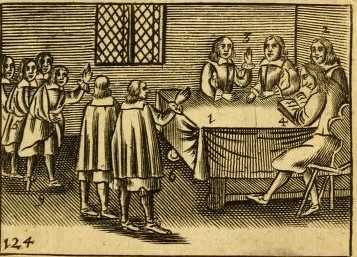
It’s a nice story and the one I’d like to believe. But it is, of course, entirely possible that Turner was at least partly right: the grand jurors may well have perjured themselves with an eye to their own interests. Turner produced witnesses who said the men on the jury were not nearly so diligent or disinterested as they claimed. Some said that Ralph Redman, the foreman of one of the juries, had received £40 from Mary Cornwall. Another of the grand jurors, Thomas Wright, had reportedly pointed out to his fellows that if they indicted Joan and said she had a case to answer then they were effectively saying the same of her employer. He argued that ‘Turner is a stranger and such a one as can not do any of us pleasure’. Cornwall, in contrast, ‘is a woman of great wealth and can make great and many friends to do any of us good’.
Turner’s perjury case against the jurors seems not to have ended in a judgement either way, or, if it did, no record has yet come to light. But whatever the impetus behind the jurors’ decisions, the fact remains that they did not forward the accusation for trial. And this fits with what we know but often forget about the supposed ‘witch craze’: even at its height, trial juries acquitted more people charged with crimes arising from witchcraft than they convicted. They also acquitted a higher proportion of people charged with such offences than they did for people charged with other capital crimes. Even some of those people they did find guilty, they convicted of lesser, non-capital crimes and so sent them to the prison or pillory instead of the gallows: jurors sometimes thought the accused guilty but deemed death too heavy a punishment for the offence.[2] And, as we see in Coleman’s case, grand juries sometimes refused even to put such suspects on trial. As the indictments tossed out by grand juries were rarely retained, we just do not know how many other juries did the same. We often focus on the elite and learned agents of restraint—the sceptical scholars such as Reginald Scot or the central court justices concerned with evidence and due process—but jurors regularly and routinely showed a degree of doubt and discernment, too.
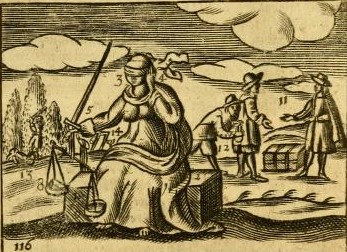
Coleman’s case invites us to consider the range of reasons for this restraint. Jurors who almost certainly believed in the existence of maleficent magic routinely decided that the individuals brought before them to be tried for harming man or beast by means of witchcraft had done no such thing: even if the accused may have had the necessary skills and knowledge, their prior good character suggested they’d not use them for ill. Or, maybe, some jurors thought their own interests better served by an acquittal, implying that the fear of witchcraft sat lower than one might expect on a spectrum of concerns. If Turner’s perjury charge was right, the grand jurors who obstructed his efforts thought that the good to be done to them by a grateful woman of means—or the harm to be done to them by an angry one—outweighed any fear they had of an errant witch.
Images:
-The feature image is from ‘Sir Thomas Aston at the Deathbed of his Wife‘, by John Souch, shared by the Manchester Art Gallery on a Creative Commons License (CC BY-NC-ND).
-The death bed image is a stock woodcut that appears in many early modern ballad broadsheets, taken here from The Ruin’d Lovers, via the Bodleian’s Broadside Ballads Online.
-‘Elinour Rummin, The Famous Ale-Wife of England’, courtesy the Wellcome Collection.
-From Bartholomaus Metlinger, Regiment der jungen Kinder (1549), via Wikimedia Commons.
-The final two images are of ‘Judgement’ and ‘Justice’, from Johann Comenius, Orbis Sensualium Pictis (1705), via Archive.org.
Notes:
[1] I am currently writing up a fuller account of this case, the records for which are spread across several files housed in The National Archives (Kew). The bill of complaint and depositions from which quotations are taken here are in STAC 5/T12/23, STAC 5/T14/8, STAC 5/T5/6, and STAC 5/T5/36.
[2] Of 474 people known to have been tried for felony witchcraft at the assize courts of the Home Circuit from 1560, James Sharpe noted that juries found 44% (209) guilty and acquitted 56% (265). For comparison, J.S. Cockburn found an overall conviction rate at the Home Circuit assizes from 1559-1624 of 56%, with 40% acquitted. In her study of the criminal courts of eastern Sussex (both assizes and quarter sessions), 1592-1640, Cynthia Herrup found an overall conviction rate of 58%, with 63% of murder cases and 59% of grand larceny cases ending in convictions. See J.A. Sharpe, Instruments of Darkness: Witchcraft in Early Modern England (Philadelphia: University of Pennsylvania Press, 1996), p. 111; J.S. Cockburn, Calendar of Assize Records. Home Circuit Indictments, Elizabeth I and James I: Introduction (London: HMSO, 1985), p. 181; and Cynthia Herrup,The Common Peace: Participation and the Criminal Law in Seventeenth-Century England (Cambridge: Cambridge University Press, 1987), p. 144. Not all of the people found guilty were executed: Sharpe found that 104 of the people charged with witchcraft were ordered to die (22% of those tried, 49.7% of those found guilty), with an additional 47 (10%) sentenced to punishments such as the pillory and imprisonment, and others reprieved, remanded, or pardoned. These percentages compare favourably to those Herrup found for crimes such as murder, horse theft, and burglary; see her chart on p. 169. Even in Essex—of the counties for which we have good runs of records, the one with the highest number of charges—a majority of those put on trial were found not guilty. See Alan Macfarlane, ‘Witchcraft in Tudor and Stuart Essex’, in Crime in England, 1550-1800, ed. J.S. Cockburn (London: Routledge, 1977), pp. 72-89 at 76.
Discover more from Legal History Miscellany
Subscribe to get the latest posts sent to your email.
 Legal History Miscellany