By Cassie Watson; posted 19 June 2026.
Serial offenders are assumed to have at least two to four victims;[1] to kill for pleasure or gain; and to follow a pattern in victim selection. If, as Eric Hickey states, the most important tool for researchers — and by implication investigators — is the ability to link common factors among victims,[2] it is apparent that this capability must rely to some degree on forensic medicine and science. This post aims to show that the phenomena associated with the killer known as Jack the Ripper have profoundly shaped the forensic investigation of what is now termed ‘serial homicide’, a label that incorporates a range of often unstated assumptions about what constitutes a ‘series’ of murders, not least the presumption that they are in some way ‘mysterious’ or ‘inexplicable’, and pre-planned.[3] This influence was visible as early as the 1880s, both in police efforts to solve unusual murders and in subsequent psychological attempts to identify suspects’ motives; and it is still central to the definition and working practices adopted by criminologists and law enforcement officials.[4]
Forensic Evidence in the Ripper Investigation
The accepted number of victims killed by the murderer known as Jack the Ripper is five, from Mary Ann Nichols on 31 August 1888 to Mary Jane Kelly, killed on 9 November, but the murder on 7 August 1888 of Martha Tabram was thought for some weeks to be the work of the same killer. However, it is clear that by the time of Kelly’s death the police were confident that Tabram was not part of the series.[5] This view was founded largely on the evidence gleaned from forensic pathology, given further support by the conclusions of Dr Thomas Bond, London’s most eminent police surgeon. He added an additional level of analysis based on forensic psychiatry, by creating a rudimentary criminal profile of the offender.[6]
As no one ever got a good look at the supposed killer, who left almost nothing behind to submit to scientific analysis, the forensic evidence focused by necessity on the bodies of the victims and, by extension, the locations where they were found in Whitechapel. This is why Tabram’s killing was initially thought to be related: she was stabbed 39 times, there was no sign of any struggle, she was killed where she was found, and the killer was right-handed. Following the next two killings there was some disagreement among the medical witnesses about a number of issues: did the killer have anatomical knowledge, was he right- or left-handed, did he attack the victims from the front or from behind? But following the Double Event on 30 September 1888, when Elizabeth Stride and Catherine Eddowes were killed within an hour of one another, the police surgeons, Dr George Bagster Phillips and Dr F. Gordon Brown, were able to agree on the fact that the killer had no anatomical knowledge, was right-handed, had used a knife with a blade at least six inches long, had cut the victims’ throats from the front while they were lying down, and had then mutilated Eddowes.[7]
The killer’s progressively extensive mutilation of the women’s faces and bodies was the subject of much attention: it was highly unusual and came increasingly to be seen as the motive for the killings, plainly unrelated to the typical revenge, robbery or jealousy that investigators were accustomed to.[8] Mary Ann Nichols was disembowelled, Annie Chapman’s internal organs were removed and her body was posed, as was that of Catherine Eddowes, which was even more severely mutilated. Only Elizabeth Stride’s body was not maimed in this way, probably because the perpetrator was interrupted; but the mutilations inflicted on Mary Jane Kelly were savage in the extreme because the killer had more time.
By December 1888 it was clear to forensic psychiatrist Edward Spitzka that the murderer was neither an impulsive lunatic nor the first to commit such crimes.[9] The mutilations were the key to Spitzka’s assumption that although the case was not exactly like any known previously, the killer’s underlying motive was likely to be sexual. Thomas Bond had already concluded that the killer must be “subject to periodical attacks of homicidal and erotic mania.”[10]
Establishing Patterns: Bodily Signs and Symptoms
By the medico-legal standards of late-1880s London there was little more that the police could do to try to catch the killer, given the few tangible clues he left, but it was to be a different story in France a decade later, when another prolific serial killer, Joseph Vacher, who had stabbed and mutilated at least 11 people (mainly teenagers of both sexes) between 1894 and 1897, was apprehended by villagers following an assault.[11] With little physical evidence to go on, the authorities made the connection between the killings on the basis of the mutilations (which bore an uncanny resemblance to those of Jack the Ripper), Vacher’s confession, and psychiatric assessment of the killer himself, who was deemed to be a sexual sadist.[12] Echoing Edward Spitzka, renowned forensic expert Alexandre Lacassagne identified the crimes of Gilles de Rais, Jack the Ripper and Vacher as “des crimes à répétition, accomplis dans les mêmes circonstances, exécutés de la même façon, montrant un procédé opératoire toujours identique,”[13] whereby violence and bloodletting up to and including mutilation was the means of satisfying a perverted sexual instinct.
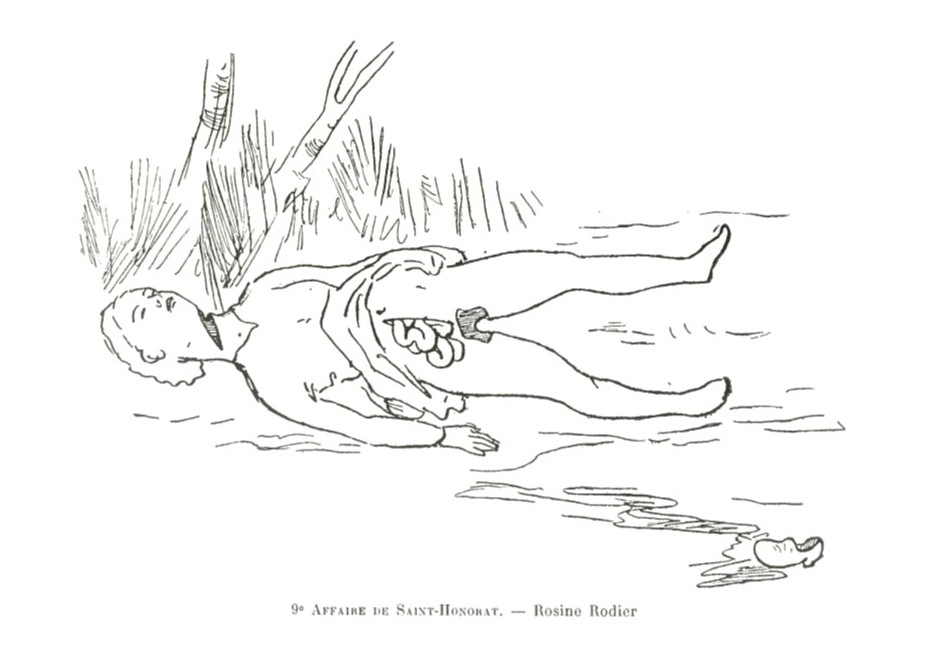
Vacher had indeed sexually assaulted many of his victims, unlike Jack the Ripper, but he pleaded insanity at his trial and had a long history of mental disturbance to prove it.[14] But Angus McLaren has argued that “leading French psychiatrists chose, despite all the evidence to the contrary, to regard Vacher as sane.”[15] They did this for, in his opinion, multiple reasons that need not concern us here, but the fact that Lacassagne identified (rightly or wrongly) a considerable degree of similarity between Jack the Ripper and Vacher is attested by the inclusion of the now well-known photographs of two of Jack’s victims, Mary Jane Kelly and Catherine Eddowes (the latter incorrectly identified) in his detailed summary of the case. This was based on the work of Arthur MacDonald, an American criminologist, who attributed 11 victims to the Ripper (December 1887 to September 1889) and stated the motive for the mutilations to be sexual.[16]
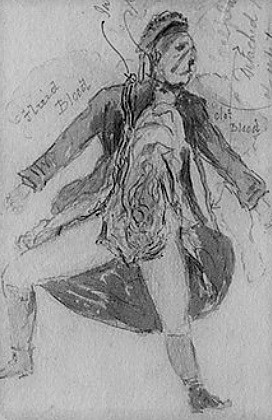
The evidence that these two killers were sadists was thus stamped on the bodies of the unfortunate victims, the location and nature of the mutilations — represented in the images above — serving as proof of a sadistic sexual motive. According to Lacassagne, “Les éléments de l’information ne nécessitent pas la supposition que le meurtrier avait des connaissances anatomiques, mais plutôt que la pratique l’avait rendu habile.”[17] By the early decades of the twentieth century this sort of ‘practice’ was most frequent in the United States and Germany where, according to Philip Jenkins, “serial homicide was often accompanied by mutilation and other forms of extreme brutality,”[18] and the word ‘Ripper’ was being used in a generic sense. Police investigations in the USA “were aided in part by knowledge of the original Ripper crimes, which played such an important role in shaping American perceptions and expectations.”[19] Information sharing and typical methods of identifying and tracking suspects (eyewitness sightings, known locations) proved successful in arresting some perpetrators, but Jenkins says nothing about the role played by forensic pathologists or psychiatrists in establishing links between crimes.
Conclusion: The ‘Ripper Template’

The medical interpretation of available evidence must have remained a dominant factor in guiding investigations, because of its crucial role in establishing patterns based on bodily signs and symptoms, but this aspect of serial homicide receives little attention from crime historians. With the possible exception of serial poisoning, historical studies tend to focus mainly on serial killing as a cultural phenomenon,[20] or on the killers themselves,[21] rather than medico-legal and investigative processes, so that we do not yet have many detailed studies of nineteenth-century serial investigations from a forensic perspective. But it seems likely that assumptions which crystallised around the Ripper were reinforced by forensic practice, and vice versa, to the extent that ‘sexual sadism’ is now a recognised personality trait: it emerged in the 1880s and found its classic expression in a 1930s Ripper-type killer, Peter Kürten;[22] while its non-sexual counterpart is not considered a distinct forensic entity.[23] Just as much as the cultural characteristics associated with serial homicide, the forensic characteristics of what amounts to a ‘Ripper template’, focused on physical acts and accompanying (assumed) psychological motivation, was embodied in the crimes of Jack the Ripper and, I suspect, the subsequent history of the forensic investigation of serial offending.
Images
Main image: A Suspicious Character, The Illustrated London News, 13 October 1888, 5. Wikimedia Commons, public domain.
Contemporaneous drawing by Dr F. G. Brown of the body of Catherine Eddowes, as discovered in Mitre Square, 30 September 1888. Wikimedia Commons, public domain.
Affaire de Saint-Honorat, Rosine Rodier. Sketch published in Alexandre Lacassagne, Vacher l’Éventreur et les Crimes Sadiques (Lyon: A. Storck; Paris: Masson, 1899), 37.
Karl Berg, The Sadist, trans. Olga Illner and George Godwin (London: The Acorn Press, 1938), 7.
References
[1] Sarah Hodgkinson, Herschel Prins and Joshua Stuart-Bennett, “Monsters, madmen… and myths: A critical review of the serial killing literature,” Aggression and Violent Behavior 34 (2017): 283.
[2] Eric W. Hickey, Serial Murderers and Their Victims, 4th edn (Belmont, CA: Thomson Wadsworth, 2006), 23.
[3] Hickey (ibid., 22) accepts that certain types of serial killing (e.g. in hospitals, nursing homes, or families) are not widely acknowledged as such because their characteristics do not match media stereotypes or the assumptions held by law enforcement officers.
[4] Sasha Reid, “Compulsive criminal homicide: A new nosology for serial murder,” Aggression and Violent Behavior 34 (2017): 290-301.
[5] Katherine D. Watson, “Jack the Ripper and forensic/medical evidence,” in The Routledge Handbook of Jack the Ripper Studies, ed. Anne-Marie Kilday, David Nash and Katherine D. Watson (Abingdon: Routledge, 2026), 139-140.
[6] Stewart P. Evans and Keith Skinner, The Ultimate Jack the Ripper Sourcebook: An Illustrated Encyclopedia (London: Robinson, 2001), chapter 20.
[7] Ibid., 143-148. The medical evidence presented at the inquests held on the victims is transcribed on the Casebook.org website. The killer may well have possessed some degree of anatomical knowledge and surgical skill: Philip Sugden, The Complete History of Jack the Ripper (London: Robinson, 2002), 368-370, 372.
[8] Lloyd’s Weekly Newspaper, 30 September 1888, 8.
[9] E. C. Spitzka, “The Whitechapel Murders: Their medico-legal and historical aspects,” The Journal of Nervous and Mental Disease 13 (1888): 765-778.
[10] Evans and Skinner, Jack the Ripper Sourcebook, 402.
[11] Angus McLaren, “Vacher the Ripper and the construction of the nineteenth-century sadist,” in Coping with Sickness: Medicine, Law and Human Rights – Historical Perspectives, ed. John Woodward and Robert Jütte (Sheffield: European Association for the History of Medicine and Health Publications, 2000), 56.
[12] Alexandre Lacassagne, Vacher l’Éventreur et les Crimes Sadiques (Lyon: A. Storck; Paris: Masson, 1899), 239-243.
[13] Ibid., 243. Repeated crimes committed under the same circumstances and executed in the same manner, displaying a consistently identical modus operandi.
[14] McLaren, “Vacher the Ripper,” 56-58.
[15] Ibid., 59.
[16] Lacassagne, Vacher l’Éventreur, 254-265.
[17] Ibid., 265. The evidence does not require the assumption that the murderer had anatomical knowledge, but rather that practice had made him skilled.
[18] Philip Jenkins, “Serial murder In the United States 1900-1940: A historical perspective,” Journal of Criminal Justice 17 (1989): 381.
[19] Ibid., 386.
[20] See for example Pieter Spierenburg, A History of Murder: Personal Violence in Europe from the Middle Ages to the Present (Cambridge: Polity Press, 2008), 193-197.
[21] Peter Vronsky, Serial Killers: The Method and Madness of Monsters (New York: Berkley Books, 2004). Chapter 9 discusses criminal profiling, focused mainly on the post-World War 2 era.
[22] Karl Berg, The Sadist, trans. Olga Illner and George Godwin (London: The Acorn Press, 1938).
[23] Lucy Foulkes, “Sadism: Review of an elusive construct,” Personality and Individual Differences 151 (2019): article 109500, pp. 4-5.
Discover more from Legal History Miscellany
Subscribe to get the latest posts sent to your email.


A quandary here because we cannot ‘like’ this, but must register approval of the quality of the work that way.
Good to have the Vacher case brought out – I did not know of it, and the contexts of other countries. I’m all for the wider picture.
LikeLiked by 2 people